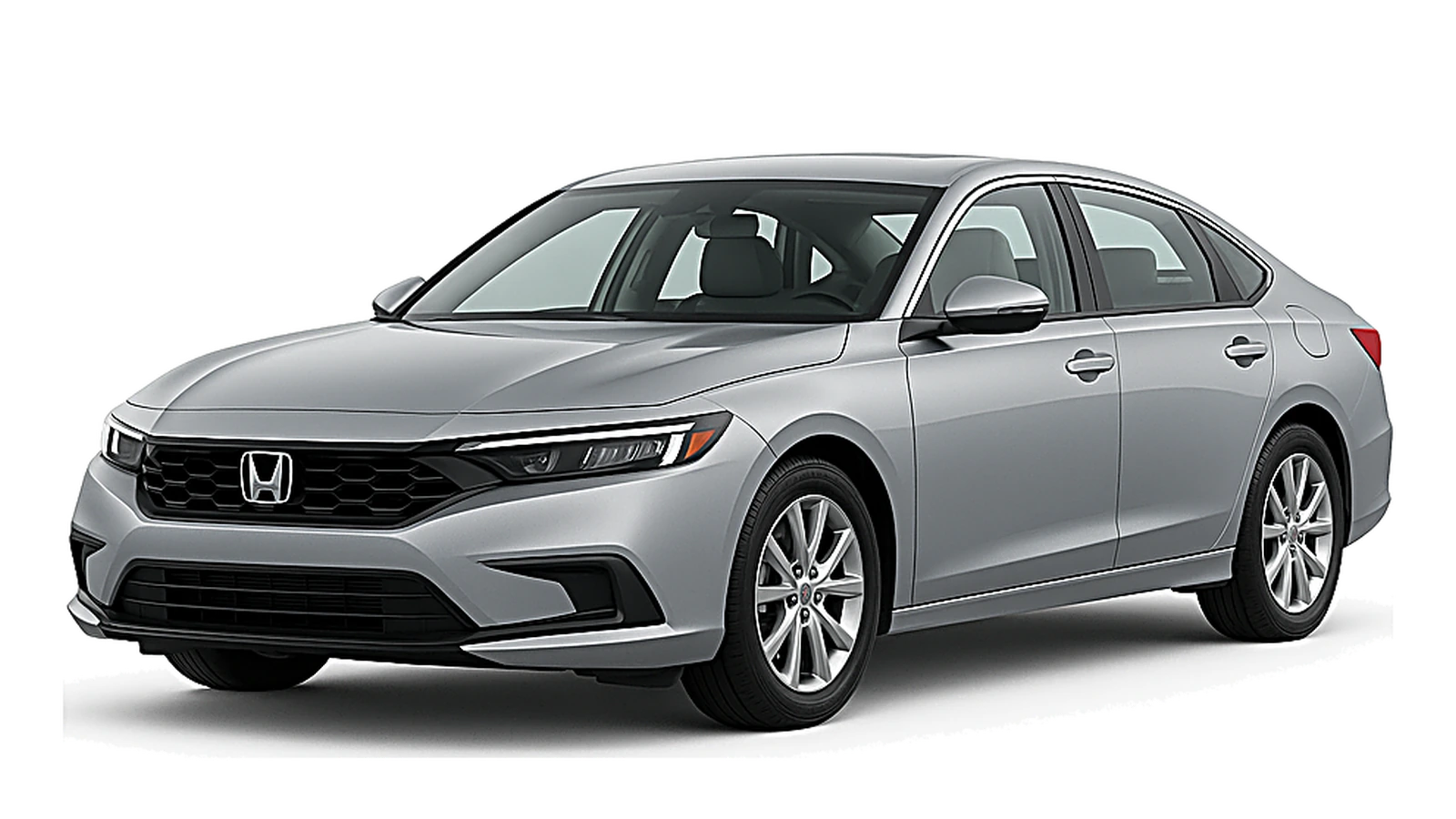
2026 Honda Accord SE Review: Specs, Price, and Value Analysis
The SE costs $2,300 more than the base LX but returns slightly lower fuel economy — here's whether that trade-off makes sense.
By IFMG Editorial
The Value Problem With the SE
At $30,695, the SE sits in an awkward spot in the Accord lineup. It shares its powertrain, drivetrain, fuel economy ratings, curb weight, and cargo capacity with the $28,395 LX — the only differences are content and price. That $2,300 gap buys additional features, but it doesn't buy better efficiency or a different driving experience. Meanwhile, the hybrid Sport trim at $33,795 is only $3,100 more and delivers 44 MPG combined versus the SE's 31 MPG combined. For anyone driving average or above-average annual miles, the fuel savings from the Sport hybrid can close that price gap over time. The SE is not the smart value pick in this lineup — that title belongs to the Sport hybrid.
Powertrain and Fuel Economy
The SE uses a 1.5-liter turbocharged four-cylinder paired with a continuously variable transmission. EPA ratings are 28 MPG city, 36 MPG highway, and 31 MPG combined. Those figures are 1 MPG lower across the board compared to the LX, which is unusual — both trims share the same powertrain and curb weight of 3,311 lbs., so the difference likely comes down to wheel or tire specifications affecting the EPA test cycle. Neither gas trim comes close to the hybrid models: the Sport, Sport-L, and Touring all use a two-motor hybrid system with an electronic CVT and return 46 city / 41 highway / 44 combined. The EX-L hybrid does even better at 51 city / 44 highway / 48 combined. If fuel costs are a priority, the SE's powertrain is the wrong choice in this lineup.
What the SE Shares Across the Lineup
Every 2026 Accord trim — gas or hybrid — shares several constants worth noting. Cargo capacity is 16.7 cubic feet across all six trims, seating is five passengers, and final assembly takes place in the United States. Warranty coverage is identical lineup-wide: 3 years / 36,000 miles basic, 5 years / 60,000 miles powertrain, 5 years / unlimited miles rust-through, and 3 years / 36,000 miles roadside assistance. Honda also includes one year or 12,000 miles of complimentary maintenance on every trim. These aren't SE-specific selling points — they're baseline Accord ownership terms.
SE vs. LX: Is the $2,300 Premium Justified?
The LX at $28,395 is the cheapest way into a 2026 Accord. The SE adds $2,300 for content upgrades not itemized in the published specifications — likely items such as additional driver-assistance features, upgraded interior materials, or convenience technology. What the SE does not add is a more efficient engine, more cargo space, or a different drivetrain. It also returns 1 MPG less combined than the LX, which means the SE costs more to buy and slightly more to fuel. Unless the specific content additions in the SE are features a buyer actively wants, the LX delivers the same fundamental ownership experience for less money.
SE vs. Sport Hybrid: The Real Decision
The Sport hybrid at $33,795 is the trim that makes the SE's position most difficult to defend. The $3,100 price difference buys a two-motor hybrid powertrain, an electronic CVT, and a jump from 31 MPG combined to 44 MPG combined — a 42 percent improvement in efficiency. At current average U.S. gas prices, that gap translates to meaningful annual savings for anyone driving 12,000 miles or more per year. The Sport also moves to a hybrid-specific transmission architecture. For a buyer who can stretch the budget to $33,795, the Sport hybrid is the stronger long-term value. The SE makes more sense only if the budget is firm below $31,000 and the LX's content level is insufficient.
Who the SE Actually Fits
The SE is a reasonable choice for a buyer who needs more content than the LX provides, has a hard budget ceiling around $31,000, and doesn't prioritize fuel economy enough to stretch to the Sport hybrid. It's assembled in the United States, carries Honda's standard warranty package, and includes complimentary maintenance for the first year. Those are real ownership benefits. But the SE is not a value leader — it's a middle-ground trim that costs more than the LX without offering meaningfully better efficiency or capability. Shoppers comparing Accord trims should look closely at the full Accord lineup comparison and the Sport hybrid's total cost of ownership before committing to the SE.
By the Numbers
Frequently Asked Questions
The SE is EPA-rated at 28 MPG city, 36 MPG highway, and 31 MPG combined. That's 1 MPG lower than the base LX across all three metrics, despite sharing the same 1.5L turbocharged engine and CVT.
The SE costs $2,300 more than the LX ($30,695 vs. $28,395) and returns slightly lower fuel economy. Both trims use the same 1.5L turbo, CVT, front-wheel drive, 3,311-lb. curb weight, and 16.7 cu.ft. cargo capacity. The SE adds content features, but not efficiency or capability.
For most buyers, the Sport hybrid at $33,795 is the stronger long-term value. It costs $3,100 more than the SE but delivers 44 MPG combined versus the SE's 31 MPG combined — a significant efficiency advantage that can offset the price difference over time through fuel savings.
No. The SE uses a gasoline-only 1.5L turbocharged four-cylinder with a CVT. Hybrid powertrains are available on the Sport, Sport-L, EX-L, and Touring trims.
Final assembly takes place in the United States, which is consistent across all 2026 Accord trims.
The SE carries Honda's standard Accord warranty: 3 years / 36,000 miles basic coverage, 5 years / 60,000 miles powertrain, 5 years / unlimited miles rust-through, and 3 years / 36,000 miles roadside assistance. One year or 12,000 miles of complimentary maintenance is also included.
The SE offers 16.7 cubic feet of trunk space — the same figure across every trim in the 2026 Accord lineup, gas or hybrid.
Bottom Line
The 2026 Accord SE at $30,695 is a functional mid-sedan with a proven turbocharged powertrain, U.S. assembly, and Honda's standard warranty package. Its weakness is positioning: it costs more than the LX without improving on efficiency, and it sits only $3,100 below the Sport hybrid, which returns 44 MPG combined versus the SE's 31. Shoppers should read the full 2026 Honda Accord trim comparison, the Sport hybrid overview, and the Accord LX analysis before deciding. The SE makes sense in a narrow budget window; outside that window, better value exists on both sides of it.
Your budget is firm around $30,000–$31,000, the LX's content level doesn't meet your needs, and you're not driving enough annual miles to justify the hybrid premium.
You can stretch to $33,795 — the Sport hybrid's 44 MPG combined makes it the smarter long-term buy. Or drop to the $28,395 LX if the SE's extra content isn't something you'll use.
The 2026 model year is current, so there's no near-term refresh to wait for. If the SE fits your budget and content requirements, current pricing is what it is. If you're flexible on trim, compare the Sport hybrid's total cost of ownership before signing.
Next steps
- Buyer's Guide
- Inventory
- News
- Recalls
- Compare
- Reviews
- Trim details
- Is the 2026 Honda Accord Touring Worth Its $11,100 Premium Over the LX?
- 2026 Honda Accord vs Toyota Camry: Hybrid MPG, AWD, and the Trim Choice That Matters
- 2026 Honda Accord vs Nissan Altima: Hybrid MPG or AWD Gas Sedan?
- 2026 Honda Accord vs Kia K5: Hybrid MPG or Gas Simplicity?