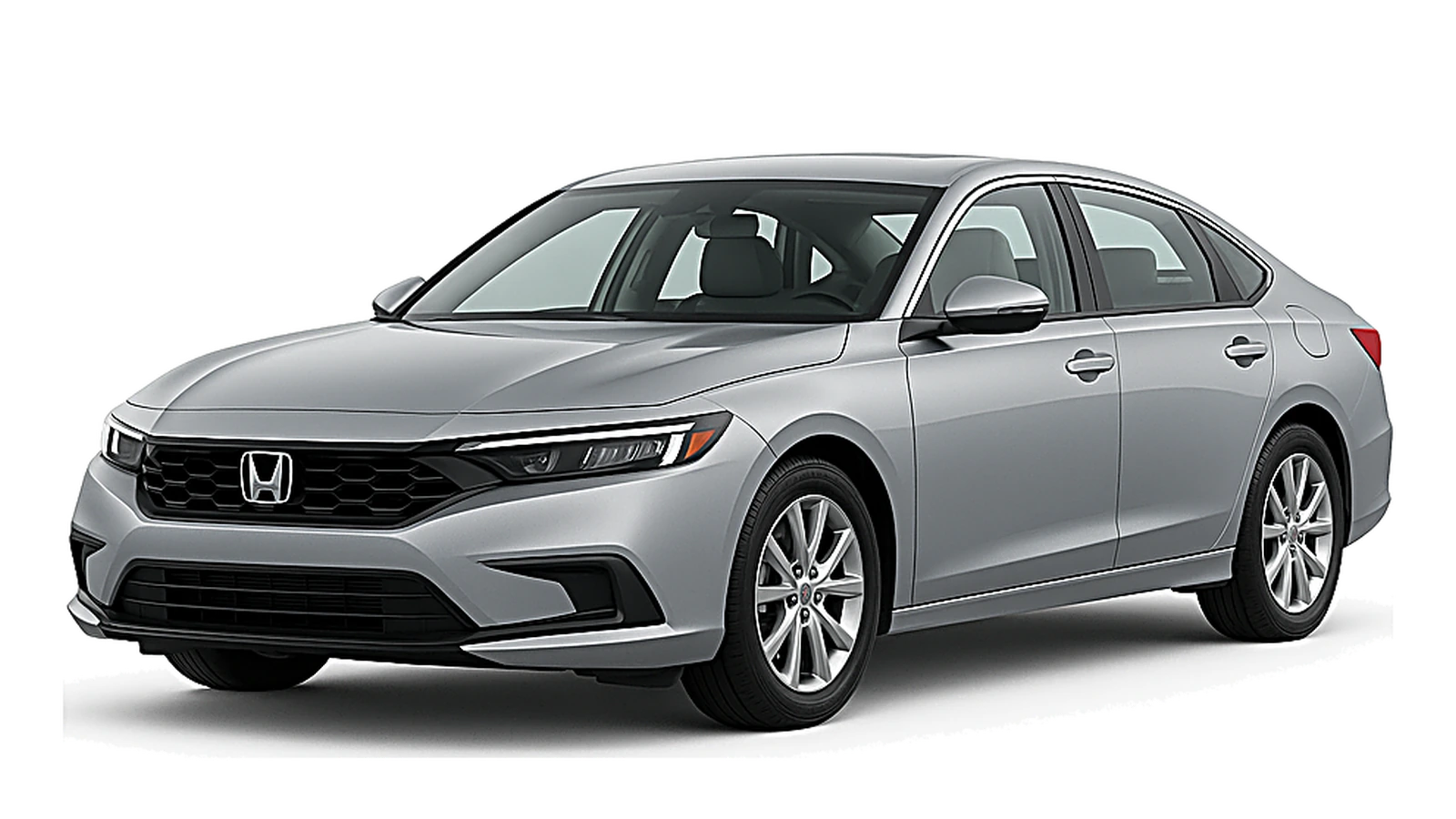
2026 Honda Accord SE: Worth the $2,300 Step Up from the LX?
The SE sits $2,300 above the LX and $3,100 below the cheapest hybrid trim. Here's what that money actually buys — and whether it makes sense.
By IFMG Editorial
What $2,300 Buys Between LX and SE
The SE costs $30,695 versus the LX's $28,395 — an 8.1% premium. Both trims share the same 1.5L turbocharged four-cylinder, the same CVT, the same front-wheel drive layout, and the same 16.7 cubic feet of cargo space. Warranties are identical across both: 3-year/36,000-mile basic, 5-year/60,000-mile powertrain, and one year of complimentary maintenance. The published specs don't reveal a feature list difference between the two, which makes the $2,300 gap difficult to justify on paper. Without a documented equipment delta, the SE's price premium rests on content that isn't captured in the core specification data — a weak foundation for a purchase decision.
The Fuel Economy Problem
Here's the detail that actually cuts against the SE: its EPA ratings are marginally lower than the LX's. The SE returns 28 city / 36 highway / 31 combined mpg, while the LX posts 29 city / 37 highway / 32 combined. Both use the same engine and transmission, so the difference is small — but the SE costs more and uses slightly more fuel. That's the wrong direction for a trim that's supposed to represent a step up. Buyers who care about fuel costs should note this before assuming the SE is simply a better-equipped LX.
The Real Fork in the Road: Gas vs. Hybrid
The most consequential decision in the Accord lineup isn't LX versus SE — it's whether to stay with the turbocharged gas engine or move to the two-motor hybrid. The cheapest hybrid Accord is the Sport at $33,795, which is $3,100 more than the SE. That $3,100 buys a meaningful powertrain change: the hybrid Sport returns 46 city / 41 highway / 44 combined mpg versus the SE's 28/36/31. For buyers who drive a lot, that gap compounds over time. The SE sits in an awkward middle position — priced above the entry-level gas trim but below the point where the powertrain actually changes.
SE vs. Sport: The $3,100 Question
Stretching from the SE to the Sport hybrid costs $3,100, or about 10.1% more. In exchange, the powertrain switches entirely — from a turbocharged gas four-cylinder to Honda's two-motor hybrid system. The city mpg figure alone jumps from 28 to 46. For commuters or high-mileage drivers, that difference in fuel consumption is tangible over a five-year ownership period. The Sport also carries a higher combined rating of 44 mpg versus the SE's 31. If the budget can reach $33,795, the Sport makes a far stronger case than the SE does at $30,695.
Who the SE Actually Fits
The SE isn't without a use case. A buyer who has a firm budget ceiling around $30,000–$31,000, wants a new Accord rather than a used one, and doesn't prioritize fuel economy above other factors could land here. It's assembled in the United States, carries the same warranty structure as every other Accord trim, and seats five with 16.7 cubic feet of trunk space. But that profile describes the LX just as well — and the LX costs $2,300 less. The SE makes the most sense if it includes specific content (audio, safety, or convenience features) that a given buyer values and that the LX omits. Without that confirmed equipment advantage, the LX is the cleaner choice.
The Smart Value Pick in This Lineup
Across the full Accord lineup — which spans $11,100 from LX to Touring — the LX at $28,395 is the value anchor for gas-engine buyers, and the Sport hybrid at $33,795 is the value anchor for efficiency-focused buyers. The SE at $30,695 falls between those two logical stopping points without a clear advantage over either. Our trim guide (Which Honda Accord Trim Should You Buy?) covers the full lineup comparison in detail, but the short version for SE shoppers is this: go down to the LX and keep $2,300, or go up to the Sport hybrid and gain a meaningfully better powertrain for $3,100 more.
By the Numbers
Frequently Asked Questions
Based on published specs alone, it's hard to justify. The SE costs $2,300 more than the LX, uses the same engine and transmission, and actually posts slightly lower EPA fuel economy figures. Unless the SE includes specific equipment the LX omits that you need, the LX is the stronger value.
For high-mileage drivers, the hybrid makes a strong case. The cheapest hybrid trim — the Sport at $33,795 — returns 44 mpg combined versus 31 for the SE. That's a 13-mpg combined advantage for $3,100 more than the SE. Whether it pays off depends on how many miles you drive annually.
Among the published specs, the EX-L hybrid leads with 51 city / 44 highway / 48 combined mpg. The Sport, Sport-L, and Touring hybrids all return 46 city / 41 highway / 44 combined. The gas-engine LX and SE trail significantly at 32 and 31 mpg combined, respectively.
Both use the same 1.5L turbocharged four-cylinder and CVT, but the EPA rates the SE at 28/36/31 mpg versus the LX's 29/37/32. The difference is small but real. The published specs don't explain the cause — it may relate to equipment weight or other calibration factors — but the SE does not improve on the LX in fuel economy.
For buyers who want to minimize upfront cost, the LX at $28,395 is the value pick among gas trims. For buyers who prioritize fuel efficiency and plan to keep the car several years, the Sport hybrid at $33,795 offers the lowest entry point into the hybrid powertrain, which returns 44 mpg combined.
Yes. All trims in the 2026 Accord lineup, including the SE, list the United States as the final assembly location.
The Sport hybrid costs $33,795 — $3,100 more than the SE's $30,695. That premium buys a two-motor hybrid powertrain rated at 44 mpg combined, compared to the SE's turbocharged gas engine rated at 31 mpg combined.
Bottom Line
The 2026 Accord SE costs $2,300 more than the LX, posts slightly lower fuel economy than the LX, and shares the same powertrain, transmission, cargo space, and warranty structure. It occupies a pricing gap without a clear specification advantage. The LX is the smarter gas-engine buy, and the Sport hybrid is the smarter efficiency buy. The SE serves buyers with a specific budget ceiling who need a new Accord and can confirm it includes equipment the LX omits — otherwise, it's the lineup's weakest value position.
Your budget tops out around $30,000–$31,000, you've confirmed the SE includes specific features the LX doesn't offer that matter to you, and you're not concerned about fuel economy.
You're choosing between SE and LX purely on specs — the LX wins that comparison. Or if you can stretch to $33,795, the Sport hybrid's powertrain upgrade makes the SE look like an expensive middle ground.
The 2026 Accord is a current-model-year vehicle with no published changes pending. If you need a car now, buy now. If the SE's value proposition feels thin — which the specs suggest it is — use that hesitation as a signal to reconsider the LX or Sport hybrid instead of waiting for a deal that may not materialize.
Next steps
- Buyer's Guide
- Inventory
- News
- Recalls
- Compare
- Reviews
- Trim details
- Is the 2026 Honda Accord Touring Worth Its $11,100 Premium Over the LX?
- 2026 Honda Accord vs Toyota Camry: Hybrid MPG, AWD, and the Trim Choice That Matters
- 2026 Honda Accord vs Nissan Altima: Hybrid MPG or AWD Gas Sedan?
- 2026 Honda Accord vs Kia K5: Hybrid MPG or Gas Simplicity?